
- Smart buildings
- Deutsche Telekom
World's first internet router made for Deutsche Telekom from old smartphone components
Shown at Mobile World Congress, the router proves that hardware an operator gives to millions of customers can be built from reused electronics
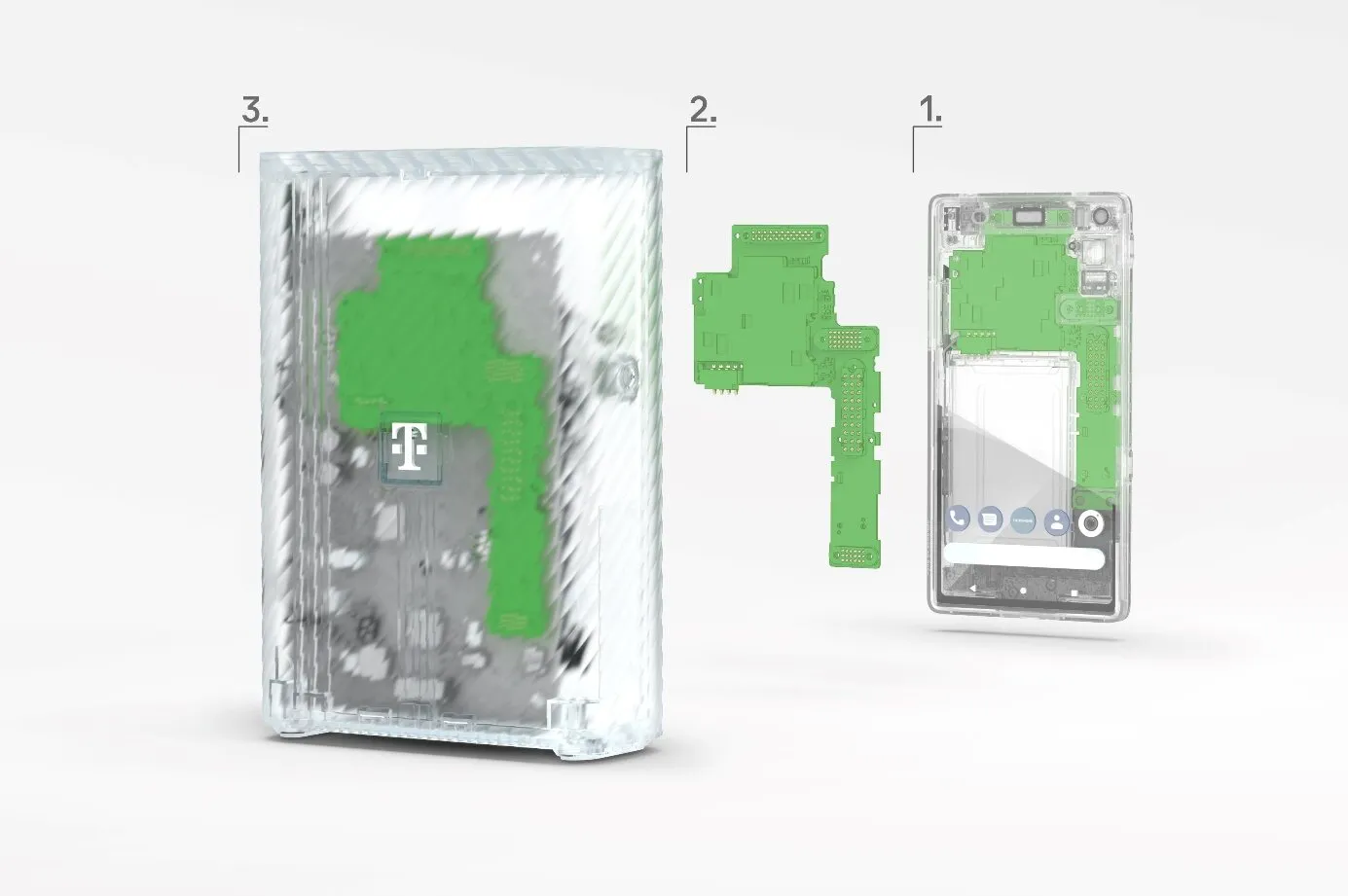
Citronics developed the NeoCircuit Router for Deutsche Telekom as a working prototype. It was shown at Mobile World Congress, and it is the world's first home internet router made from old smartphone components. It is designed around the computer of a retired smartphone, and 70% of the electronics inside it, counted by weight, were reused.
 Challenge
Cleaner electricity can never cancel the carbon used to make a router
A home router is plugged in day and night, so the electricity it uses causes most of its emissions, 60 to 70% of the total, depending on how much of a country's electricity comes from clean sources. That share keeps falling as electricity gets cleaner.
The rest is embedded carbon, the emissions that come from making the electronics inside the router. This carbon is released in the factory, before the customer even plugs the device in, so nothing that happens later can remove it. The only way to avoid it is to build the router from electronics that have already been made.
Those electronics already exist, inside retired smartphones. After a few years a phone is taken out of service, but its computer often still works perfectly well, and Europe already has millions of such phones. The question for an operator is whether electronics taken out of those phones can be cheap enough and reliable enough for a device the operator gives to millions of customers. Deutsche Telekom wants its devices built as far as possible from parts that have already been used, so it decided to find out, and had one home router built from reused smartphone electronics.
 Solution
70% of the electronics inside come from another device
The NeoCircuit Router starts from the computer board of a smartphone taken out of service. Citronics recovers that board, tests it, reprograms it and approves it for use. Once a board is approved, a new product can be designed around it. The board does the computing, sends internet traffic to the right device in the home, blocks unwanted traffic and provides the wireless connections. That is most of the work a home router has to do. A second board, designed for this product, holds the sockets for the cables and connects the router to the internet through the telephone line.
 Benefits
Half the embedded carbon, and a supply chain that is harder to disrupt
Reusing chips that already exist cuts the router's embedded carbon by around 50%, compared with the new router Deutsche Telekom would otherwise give its customers. Cleaner electricity can never remove that carbon, because it was released before the router was switched on.
Deutsche Telekom estimates that costs could fall by at least 20% if the approach is used at high volumes, because the most expensive parts do not have to be manufactured again. Those parts come from devices already in Europe, not from a supply chain that crosses the world, so there are fewer places where it can break.
−50%CO₂ eq.
embedded carbon
vs. conventional router

One of the best gadgets
MWC 2025
−20%
cost reduction
at scale
We wanted to know whether reused electronics could do the job of new ones in a home router. In this prototype they did. Those electronics came out of devices already present in Europe, which makes our supply chain more resilient and helps to cut costs. That matters for a product we field by the million.
 Henning NeverProject manager, Deutsche Telekom
Reusing processors that already exist removes around half of a home router's embedded carbon, the emissions produced when its electronics are made. Citronics took us from the first idea to a working device in two and a half months, and showing it at Mobile World Congress made us the first to act on an idea our industry had missed.
 Ole SchillingHead of Climate & Circularity, Deutsche Telekom